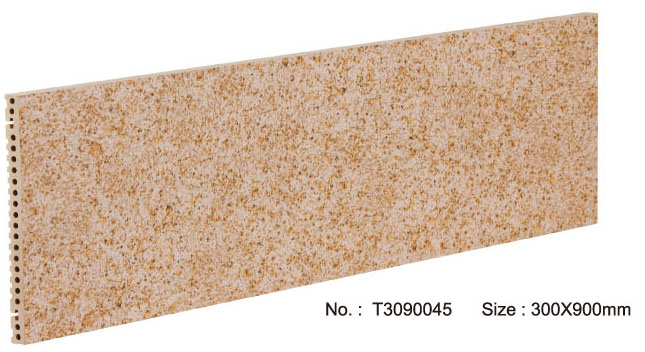
T3090045 is an archived LOPO porcelain panel presented for wall cladding under a “3D inkjet” and curtain-wall description. Its former 300 × 900 mm format and digitally patterned design idea remain useful when an architect wants the visual depth of stone, wood or another mineral surface in a regular ceramic module. The catalogue record is historical rather than a current system specification. This guide shows how to carry its aesthetic intent into a responsible present-day enquiry.

T3090045 archive snapshot

The old entry identified porcelain, a nominal 300 × 900 mm size and exterior-wall use. It also included generic colour, surface-treatment, packing, application and certification lists. Those fields record an earlier catalogue presentation; they do not demonstrate which combination belonged to T3090045 or what can be manufactured today.

ItemT3090045
Archived material and sizePorcelain; 300 × 900 mm
Archived useExterior wall / curtain-wall panel reference
Generic archived coloursWhite, red, yellow, brown and grey
Generic archived treatmentsMarble, petrified wood and antique stone
Archived credentials3C and ISO 9001:2000 references; current applicability unverified
Archived T3090045 3D inkjet porcelain wall panel

The preserved photograph shows the historic catalogue reference. It is not a current colour standard, profile drawing, installation detail or guarantee of available pattern.

What the 3D inkjet concept contributes visually

In the archived title, “3D inkjet” signals a digitally developed surface effect rather than a three-dimensional structural system. Such imagery can suggest mineral veining, timber-like movement or aged-stone variation across a flat ceramic field. That gives designers a way to explore familiar material character with the disciplined geometry of modular panels.

The phrase does not verify the current printing process, relief, ink system, finish or durability of T3090045. Ask the current supplier to explain the offered surface in precise terms. A physical sample should show whether the effect comes from printed graphics, texture, glaze, sheen or a combination of these characteristics.

Pattern scale, repeat and facade composition

Digital patterns must be assessed beyond a single panel. Veins or grain that feel natural in one sample may become visibly repetitive across a large elevation. The archived 300 × 900 mm proportion can support long directional lines, but its joints may also interrupt imagery in ways that matter to the design. Early studies should therefore consider orientation, pattern family, visual variation and the relationship between adjacent modules.

Request enough current sample material to judge repeat and range, not only a carefully selected hero piece. Review it beside glazing, metalwork, soffits and neighbouring cladding under representative light. Keep the approved sample codes, pattern option and drawing revision linked so project participants are evaluating the same proposal.

Interpreting the curtain-wall wording carefully

“Curtain wall panel” describes the archived application category; it does not make T3090045 a complete curtain-wall assembly. The old page cannot establish present product interfaces, project suitability or any supporting-system design. Its greatest value is to communicate an architectural surface direction for exterior enclosure discussions.

Project teams should separate the ceramic facing decision from responsibility for the complete wall. Qualified facade professionals must coordinate the proposed panel with the rest of the envelope using current drawings and evidence. No structural load, span, spacing, anchorage or installation decision should be inferred from the catalogue name, old photograph or generic data.

Archive claims that need current evidence

The historical body listed white, red, yellow, brown and grey; marble, petrified-wood and antique-stone treatments; exterior applications; generic building types; wooden-pallet packing; and 3C and ISO 9001:2000 wording. These were broad archive statements. They are not current model-specific claims, and they should not be copied into a specification or procurement schedule.

Ask for a dated product description that identifies the offered material, format, finish, pattern, colour range, tolerances and intended application. Request applicable declarations, reports and certificates tied to that exact configuration and destination market. The quotation should confirm sample status, present availability, quantity, packaging, programme and delivery terms. If a current alternative replaces T3090045, record the new reference clearly rather than retaining an obsolete model number.

Archive boundary: T3090045 preserves a digitally patterned porcelain concept. A current written offer, drawing, approved sample and applicable evidence define any product proposed for the project.

Compare current products and project imagery

Start with LOPO’s current architectural panel overview when comparing present ceramic surface and module options.

Browse the wall-cladding project gallery for pattern scale, orientation and material-junction context.

Explore the broader architectural facade gallery to compare patterned surfaces with quieter fired-clay products.

Use the LOPO contact page for samples, current product guidance, documentation and quotations.

Built references can refine the visual brief, but their products and approvals remain specific to their own projects.

Send a current T3090045 design brief

Provide the building location, facade area, elevations, desired panel orientation, pattern reference, preferred colour and sheen, adjoining materials, approximate quantity and delivery programme. Mention T3090045 and explain whether marble, wood-like, antique-stone or another visual direction is intended.

Email roger@lopoterracotta.com or contact LOPO Terracotta. Ask for a current alternative or confirmed product path, representative range samples, present drawings and documentation for the exact option offered. Clearly distinguish concept imagery from the sample proposed for approval, and ask that each response carry the same product and pattern reference.

For larger elevations, include a simple pattern-distribution objective in the brief: for example, whether the composition should appear calm, varied or strongly directional. That is an aesthetic goal, not an instruction to fabricate or install the panels. Ask the manufacturer to show how the current pattern family can support it and to identify any visual limitations. Recording this discussion early helps prevent a single small sample from being treated as proof of the appearance of an entire facade.