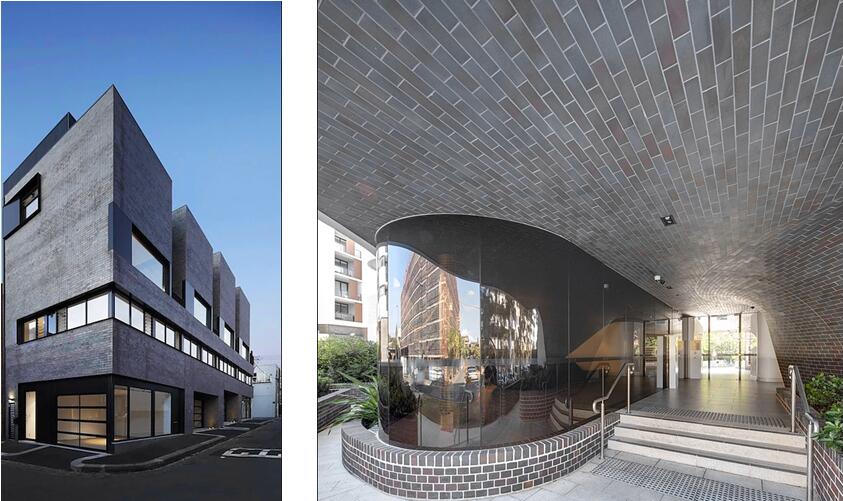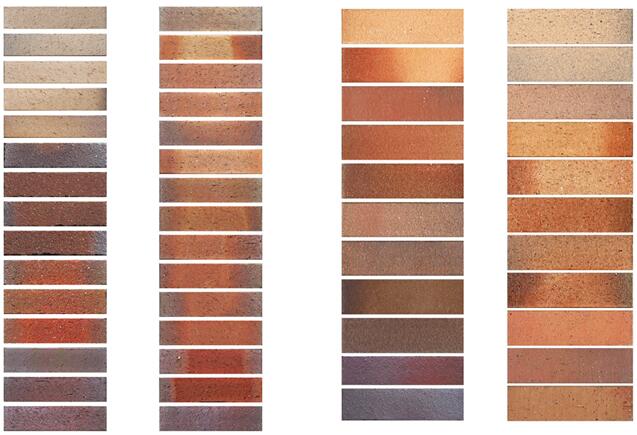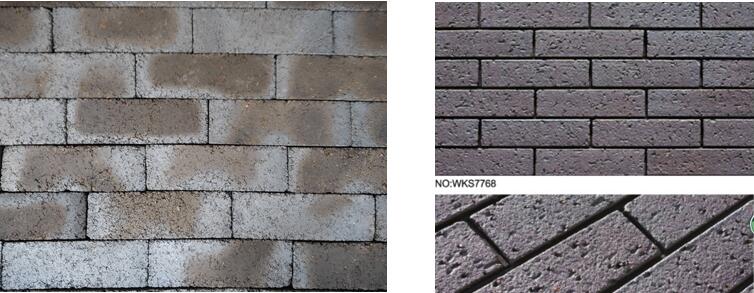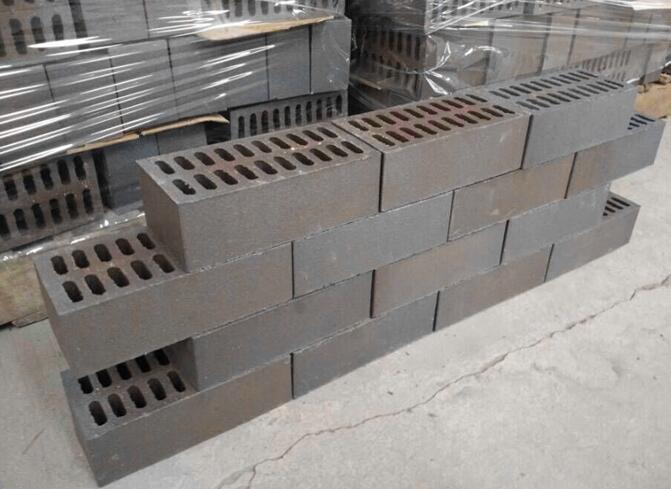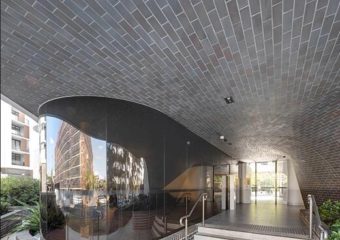
Variegated clay brick tiles use controlled differences in tone and surface to make a wall feel layered rather than uniform. LOPO’s archived “Restore Series” presented warm, charcoal and mottled fired-clay effects across thin brick tiles and thicker brick formats. The design value lies in the range between units, not in one isolated sample.
The 2018 article associated the appearance with oxides and a special firing technique. Exact current recipes and firing conditions are product-specific, so this guide focuses on what a project team can verify: fired samples, approved variation, format, performance, mixing and installation.

Understand the Restore Series appearance
“Restore” is a historical LOPO range name rather than a standard technical classification. It describes an intentionally aged or atmospheric family of surfaces in which neighbouring pieces may appear lighter, darker, warmer, cooler or more mottled. Such variation can suit contemporary buildings as well as designs seeking the depth of weathered masonry.
Ceramic colour can be influenced by clay composition, oxide-bearing colour treatments, surface preparation, kiln atmosphere, temperature profile and cooling. The exact combination behind a current product should come from its manufacturer. A photograph cannot establish whether a finish is body colour, engobe, glaze, reduction effect or another treatment, and those routes may have different visual and performance characteristics.
Separate intentional variation from inconsistency
Natural-looking does not mean uncontrolled. The architect should describe the visual range, the amount of contrast and the desired distribution. A narrow blend may read as one calm field; a broad blend produces a stronger patchwork. Neither is automatically better—the choice should support the building’s scale, geometry and viewing distance.
Tonal range
Define acceptable light and dark boundaries plus any warm, cool or flashed transitions between them.
Surface range
Confirm whether roughness, sheen, speckling and edge character are fixed or deliberately variable.
Wall distribution
Decide whether units are randomly mixed, blended to a rule or arranged in a designed gradient.
Rejectable defects should be listed separately from acceptable variation. Cracks, chips, distortion, contamination or incomplete finish are quality issues; a darker fired tone within an approved boundary may be part of the design.

Approve a range with fired boundary samples
Start with current fired samples from the proposed body, finish, size and production route. Select a target group and physical limits for acceptable variation, label every sample, and record the approval date. Review the set in daylight and under relevant artificial light, both flat and at an angle, because rough or semi-gloss surfaces shift as the light moves.
A larger sample board or mock-up is essential when colour contrast is strong. It reveals whether individual attractive pieces combine into a coherent wall. Include the proposed joint width and mortar or grout colour; pale joints separate every unit, while darker joints often merge the field.
Avoid single-chip approval: one tile can confirm a texture or approximate hue, but it cannot define a multi-tone blend or show the risk of clustering.
Choose format and texture for the viewing distance
Long, narrow brick tiles create pronounced horizontal rhythm. Smaller units give a finer texture and more joints. Rough-cast, handmade or rock-like faces create deeper shadows at close range, whereas flatter units emphasize colour and bond. Request current size, thickness and corner options before completing the elevation grid.
Exterior and interior walls impose different demands. Exterior selections need evidence relevant to climate, water exposure, freeze-thaw conditions where applicable, bond or fixing, wind and fire provisions. Interiors may place greater weight on impact, cleaning, corners and transitions. A floor, stair or paving application requires a product specifically documented for traffic, slip and wear; a wall tile should not be assumed suitable.

Detail thin tiles and full bricks correctly
| Format | Key coordination questions |
|---|---|
| Thin clay brick tile | What is the substrate, adhesive or mechanical retention, joint material, movement strategy and moisture path? |
| Full or hollow brick | What supports the masonry, ties it back, accommodates movement and manages cavity drainage? |
| Corner or return piece | Does the special unit preserve the intended bond, texture and colour around the visible edge? |
| Curved or soffit zone | Can the unit geometry, fixing and setting-out safely follow the surface without narrow cuts or poor bearing? |
For adhered systems, follow a project-approved substrate preparation and installation specification. For mechanically supported or masonry systems, the responsible engineer must verify loads, anchors, ties and support. Ceramic material selection does not by itself define a complete wall assembly.

Control production, packing and site mixing
Agree how many pieces or batches will be checked against the approved range and retain labelled reference samples. Packaging should identify colour family, batch and elevation or zone where necessary. If the intended appearance is blended, draw from several pallets during installation rather than completing one area from a single pallet.
Inspect representative work early, before a large wall is complete. Review from normal public distance and close range, record any approved adjustment to the mixing rule, and protect the surface from mortar, adhesive and cleaning damage. Order suitable spares that reflect the overall range, not only the target tone.
Explore LOPO’s terracotta tile range, terracotta brick options, and architectural terracotta projects.
Request a variegated clay brick sample set
Send the project location, elevations, preferred format, colour range and surface character, estimated quantity, application, performance requirements and programme. LOPO can review current manufacturing feasibility and prepare relevant fired samples and product information for evaluation.