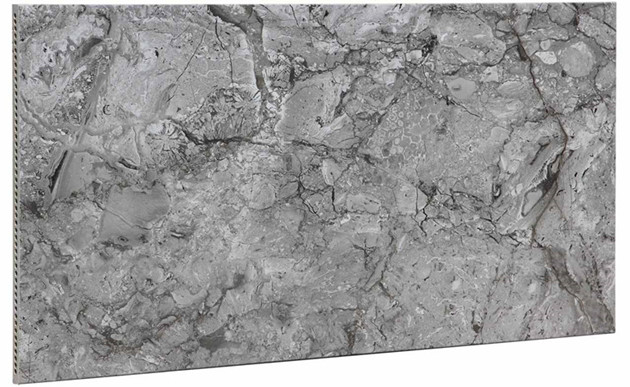
This page preserves a PM826 finish record published in November 2016 and reframes it as a glazed, stone-look terracotta selection guide. The archived page used both “glazed marble look” and “3D Inkjet” terminology but did not document the coating, ink, glaze or firing build-up. Treat those words as historical finish labels until the current product construction is confirmed.
This guide is intentionally narrower than the main Terracotta Rainscreen and Glazed Surface pages. It focuses on visual selection, archived PM826 data and the current samples and documents a project team should request.

Archived PM826 product and commercial record
The values below are retained for traceability. The current-use column identifies what must be verified before a value is transferred to a live project.
| 2016 field | Archived value | Current-use boundary |
|---|---|---|
| Item / model | PM826 | Use as a legacy reference; confirm that the code is active and still identifies the same body and finish. |
| Size | Customized | No dimensions were stated. Confirm available module, geometry, tolerances, edge conditions and fixing interface. |
| Color | MIX | Approve current samples, an acceptable color range, pattern distribution and batch-control method. |
| Surface finish | 3D Inkjet | The post title also said “glazed.” Confirm the current layer/build-up terminology, relief, gloss, print repeat and compatibility with the selected panel. |
| Material | Natural Clay | A historical material description; confirm the current body and do not treat it as environmental or application evidence. |
| Weight | 31 kg/m² | The source cites no product configuration, test method or tolerance. Obtain the current declared value for structural and logistics work. |
| Water absorption | Less than 0.5% | The source cites no standard, specimen, laboratory or report. Require current scoped technical evidence before relying on this value. |
| Thickness | 18 mm | Confirm current section, local tolerances and fixing compatibility; do not transfer this value to another item. |
| Minimum order | 1,500 m² | A historical commercial term only. Request a current quotation for the chosen finish, module, quantity and schedule. |
| Lead / delivery time | 35 days | A historical estimate only. Current timing depends on approval, production, quantity, packing, destination and logistics. |
| Legacy certification text | CE, ISO 9001:2008 | Not presented as current. Request each applicable document with holder, scope, site, product, issuer and validity. |
| Legacy order route | Order button enabled to old `/contact-us/` URL | Use the current Contact page for project requests. |
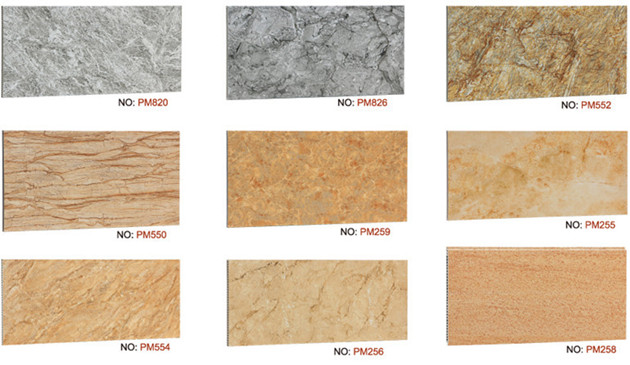
Preserved stone-look finish and item board

Readable legacy item references on the board:
These are terracotta finish references that take visual cues from stone; they are not quarried stone. The board is a useful archive index, not a substitute for current samples or permission to combine one item’s finish with another item’s dimensions or data.
How to select a glazed or printed stone-look finish
Confirm the exact construction
Ask whether the proposed item is glazed, inkjet printed, textured or made with a combined process, and which face, edge and return treatments are included. Do not infer the build-up from the 2016 labels.
Review more than one viewing condition
Compare current samples under the project’s expected daylight and artificial light, at close and facade viewing distances. Gloss, relief, color and pattern can read differently with angle and scale.
Approve color and pattern range
Define acceptable variation, image repeat, orientation, distribution, joint rhythm and replacement strategy. Use a larger repeated mock-up when a single piece cannot show the facade composition.
Verify batch and sample status
Record the item, body, finish, sample date and approval reference. Confirm how production lots and later replacement pieces will be assessed against the accepted range.
Set cleaning criteria
State the likely deposits, cleaning access, water and products to be considered. Require current manufacturer guidance and project trials; appearance alone does not prove stain or chemical resistance.
Request exposure evidence
For the proposed climate and orientation, review applicable current weathering, UV/color, moisture and other required data with its standard, specimen, date and scope. Do not promise permanent color.
Separate appearance from complete-facade performance
A rainscreen or curtain-wall assembly includes the selected panel, clips, rails, brackets, anchors, joints, cavity, insulation, air-and-water control layers, flashings, fire stopping and supporting wall. A glazed face cannot establish how that complete configuration performs.
Project teams should define structural actions, wind, impact, moisture, fire, thermal, acoustic, durability, tolerances, movement, maintenance and applicable-code requirements for the actual assembly. Use current product data, engineering, details, samples and project-specific testing where required; the archived PM826 weight and absorption fields are not full-system results.
- Current product data for the exact item, body, surface, dimensions and fixing route
- Representative physical samples and a dated, labelled approval range
- A repeated layout or mock-up showing pattern distribution, orientation, joints and corners
- Applicable current reports with standards, editions, specimens, laboratories, dates and results
- Cleaning and maintenance guidance plus any project trials needed for the expected exposure
- Facade-system drawings, calculations, tolerances, movement details and mock-up requirements
- A current quotation covering minimum order, programme, packing, delivery and replacements
Archived application claims need a fresh review
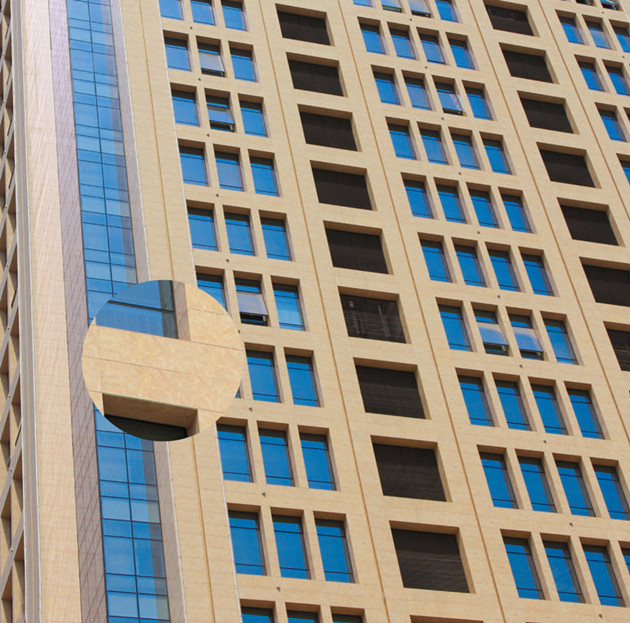
The 2016 article marketed this finish for new and renovated exterior walls; metro, railway, tunnel and other underground projects; European- or American-style architecture and villa walls or roofs; ceilings; office buildings and commercial podiums; interior walls; and surgery rooms, clean rooms, pharmaceutical facilities and food-production workshops.
That list is preserved as historical context, not as evidence of approval or universal suitability. Each use requires its own review of substrate, exposure, fixing, movement, fire strategy, structural actions, enclosure details, access, hygiene or emissions criteria, cleanability and governing codes.

Use the Architectural Terracotta Gallery for identified precedents. A precedent may inform visual discussion, but its engineering, finish approval and performance conclusions do not automatically transfer to a new project.
Request current PM826 or related finish information
Send the project location, elevation drawings, target module, preferred archived item references, expected viewing conditions, estimated quantity, required standards, delivery destination and programme. Ask whether PM826 and the board references remain manufacturable before naming them in a specification.