A terracotta louver supplier in China should be qualified against a real project, not selected through “best,” ranking or low-price language. Legal identity, manufacturing responsibility, exact profile and tooling, relevant solar and structural evidence, batch control, export logistics and aftercare must form one traceable supply proposal.

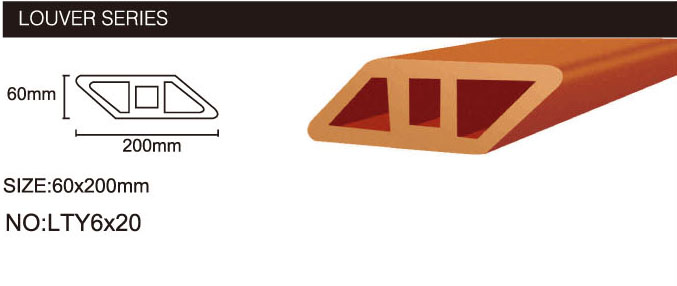
2013 archive boundary: the old page claimed “Best” and “Supplier from China,” labelled a natural-clay louver, an archived 60 × 200 mm size, broad colours, pallet packing, interior and exterior uses, building types and 3C or ISO wording. Its separate panel test table and all ranking, green, performance, certification and suitability claims are historical only. They do not verify a current supplier, factory, product, price advantage or qualification.
Engineering boundary: supply-chain qualification does not replace project engineering. A current louver requires a complete, traceable system matched to its profile, length, orientation, supports, fasteners, anchors, substrate, project actions, movement, exposure and fire strategy and approved by responsible qualified professionals. No universal load, span, spacing, anchor or installation instruction is provided.
Archived terracotta sunscreen louver supplier reference
Retained archive image. It does not establish supplier ranking, current factory capability, profile availability, system performance or project evidence.

Replace best and low price with a project matrix

Record the required louver profiles, lengths, orientations, finishes, quantities, programme, support concept, modelling inputs, technical evidence, documentation, packaging, shipping sequence and spares. Identify mandatory gates and responsible reviewers. Price comparison should follow a common, technically defined scope.

A low quotation may exclude tooling, prototypes, tests, special ends, hardware, protective packing, documentation or replacement stock. Normalize inclusions and assumptions before commercial evaluation. Retire claims such as best, leading or cheapest because they cannot define project suitability.

Set a qualification timetable with questions, revisions, sample gates and decision owners. Separate commercial comparison from technical acceptance, while ensuring programme, trade and logistics assumptions reach the technical reviewers before a supplier is shortlisted.

Verify legal identity and the manufacturing chain

Contracting entity

Confirm the legal name, address, contracting role and connection to the proposed manufacturing site.

Manufacturing site

Identify where extrusion, firing, finishing, inspection and packing for the project will occur.

Subcontracted steps

Map outsourced tooling, testing, hardware or processing and their traceability controls.

Document authority

Confirm who issues drawings, certificates, declarations, quality records and change notices.

Audit evidence should relate to the proposed product and process rather than a general brochure. Record the date, scope, site and reviewer. If production moves or a critical subcontractor changes, require notification and reassessment through the agreed project process.

Cross-check the entity shown on quotations, certificates, test requests, export documents and payment instructions. Differences may be legitimate, but their roles should be explained and documented so product responsibility and traceability do not disappear between related companies or agents.

Freeze profile, tooling and prototype stages

Require a controlled cross-section showing cavities, webs, exposed faces, corners, end conditions and tolerances. Identify whether tooling is existing, modified or new. Link design files, samples, quotations and purchase documents to the same profile revision and manufacturing route.

Define trial outputs and approval gates before production release. Use project-intent prototypes with the named supports to review fit, rotation, ends, joints, tolerances, drainage and access. If tooling correction affects geometry or faces, repeat the affected reviews.

Separate solar modelling from structural evidence

Shading, daylight, privacy or visual objectives should be evaluated with the project geometry, orientation, location and relevant scenarios. Record modelling inputs so substitutions can be checked. A product description cannot guarantee an environmental outcome.

Separately, require calculations, tests or assessments that match the exact louver, orientation, supports, connections and boundary conditions. Archived panel data cannot qualify a linear louver system. Responsible qualified professionals should review the complete load path and evidence differences.

Verify samples, batches and production control

Approve physical colour and texture ranges using production-intent pieces and retain labelled references. Review how profile geometry, straightness, ends, fired appearance and visible defects are inspected. Connect batch or lot identity to packs, quality records and installed zones.

Request a realistic project production plan with tooling, trial runs, hold points, release decisions, nonconformance control and recovery scenarios. General factory-capacity claims do not prove that the required profile, quantity, quality and programme can be delivered together.

Ask how nonconforming pieces are identified, segregated and dispositioned and how approved rework is recorded. Sampling and acceptance rules should come from the current product controls and project quality plan, not a general claim about experience.

Validate export packing and logistics

Agree how long ceramic elements are separated, supported, protected from contamination, labelled and checked before dispatch. Use representative product and the proposed shipping route to validate packing. A one-line wooden-pallet description is insufficient.

Coordinate loading, transport, customs documents, destination handling, storage and receiving inspection. Define damage reporting, quarantine, evidence and replacement communication before shipments begin. Pilot packs or early deliveries can inform later releases when documented properly.

Secure aftercare, spares and change control

Define spares by exact profile, finish range, batch relationship and hardware revision. Establish channels for technical questions, nonconformances and later replacements. Confirm how drawings and tooling status will be retained without assuming indefinite product availability.

Agree response ownership after shipment and after installation: who receives site evidence, who evaluates a suspected product issue and who coordinates replacement information. Aftercare is a documented process, not an open-ended promise or a reason to bypass project professionals.

Use the current terracotta louver range and project references as qualification context, then verify relevance. Handover should preserve approvals, evidence, batches, installed zones, inspections, maintenance responsibilities and protected spares.

Qualifying a Chinese terracotta louver supply chain? Send the profiles, quantities, programme, finishes, tooling and prototype needs, modelling inputs, system evidence list, shipping route and aftercare requirements to roger@lopoterracotta.com, or use the contact page. LOPO can prepare current project-specific manufacturing and system information for review.