Antique Thin Brick

Antique thin brick gives new construction and renovation projects the irregular colour, softened edges and tactile depth associated with aged masonry—without relying on reclaimed units of uncertain condition. The most convincing results come from a controlled range of differences, not random distressing.

LOPO handmade clay tiles are kiln-fired finishes with crafted surfaces. Colour, size and texture can be reviewed for a project, but the exact reference, performance data, corner pieces and production feasibility should be confirmed before specification.

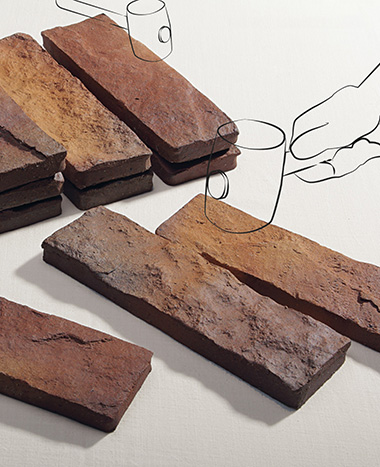
Antique handmade clay tiles with varied red brown faces and edges
The retained sample image shows the intended family resemblance: related earthy tones with visible differences in face texture and edge character.

Design an aged character rather than a fake defect

Historic brickwork develops richness through material, firing, weather and workmanship. A new antique-look tile should translate that character without pretending to be salvaged. Define the qualities that matter: colour movement, pitting, folds, sanded areas, edge softness and the depth of surface relief.

Use several physical samples together. A single dramatic unit can be attractive but may not represent a full wall. Agree a range with enough variation to avoid monotony and enough control to prevent the finished elevation from looking accidental.

Choose format, thickness and bond as one composition

Thin bricks are non-loadbearing wall finishes, not structural masonry. Their format and thickness influence the visual scale, weight, corner treatment and installation build-up. Ask for the current dimensions and back profile of the selected reference rather than assuming that all handmade tiles share one size.

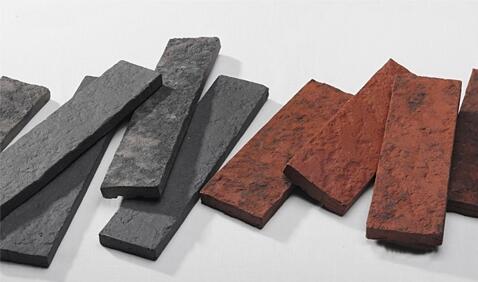
Red and charcoal antique thin brick samples in mixed lengths
Mixed tones and lengths can create depth, but the proportion, blend and joint rhythm need an approved setting-out strategy.

Running bond

A familiar pattern that lets varied faces remain the main visual feature.

Mixed lengths

Adds informality when the length range and distribution are planned rather than improvised.

Stacked accents

Can organise piers or frames, but makes alignment and tolerance more apparent.

Draw the bond around openings, corners and terminations. Confirm whether returns use purpose-made corner units, bonded pieces, mitres or a separate detail. Very small cuts and abrupt changes of course can undermine the substantial masonry character the design seeks.

Coordinate colour blending and mortar tone

Antique brick is read as a wall, not a collection of isolated pieces. Blend tiles from several cartons as work proceeds when a distributed range is desired. Mortar or joint colour can either calm the palette or amplify contrast; tooling changes the shadow line and perceived depth.

Approval itemDecision to recordUseful check
Colour rangeMinimum, typical and maximum variationMultiple current samples or an agreed range board
SurfaceRelief, pits, folds, sand and edge treatmentReview in direct and diffuse project light
BondUnit lengths, offsets and cut distributionElevation setting-out and sample panel
JointsWidth, colour, depth and toolingConstructed mock-up with proposed materials

Keep the approved panel available during installation. Photographs can record intent, but they do not reproduce colour reliably enough to replace the physical benchmark.

Resolve the substrate and wall system

For adhered veneer, the designer and installation-system supplier should verify background strength, flatness, moisture, preparation, primer, adhesive coverage, curing and joint material. Required building and substrate movement joints must continue through the finish. Do not use thin brick to bridge active cracks.

Exterior applications also need a complete water-management strategy. Coordinate heads, sills, bases, flashings, drainage and transitions to doors, windows, render, stone or metal. The face of an antique tile is decorative protection, not evidence that the wall behind it is waterproof.

Project evidence: request current information for the exact tile and proposed assembly. Fire, water absorption, freeze–thaw, bond, slip or abrasion performance cannot be inferred from the words “clay,” “handmade” or “antique.”

Read the Shenyang project as a detailing study

The original archive identifies the illustrated work as the “Twenty-four Cities” development in Shenyang. Its arcade, pilasters and framed openings show how brick proportion, projecting bands, corner treatment and dark joints can support a historic architectural language.

Shenyang arcade and pilasters finished with antique red thin bricks
Retained project reference: arches, piers and stepped bands rely on coordinated field units, returns and joint alignment.

The photograph is a useful visual reference, not a complete specification. A new project should verify the currently available brick series, sizes, corners and installation system rather than copying an old description or assuming identical production.

Plan samples, quantities and site control

Allow time for sample review and a representative mock-up before ordering. Prepare quantities by elevation, separating field units, corners and specials. Include sensible allowances for selection, cuts, breakage and future local repairs, then coordinate pallet labels with the installation sequence.

Before full installation, confirm:

  • approved colour and texture range, bond, joints and corner details;
  • substrate preparation, adhesive or fixing, weather limits and curing;
  • setting-out at openings, bases, tops, movement joints and adjacent materials;
  • cleaning trial, protection, handover guidance and labelled spare units.

Test cleaning on a discreet area. Aggressive acid, high pressure or an unverified sealer can change a crafted surface or damage joints. Record the accepted method for the contractor and building owner.

Discuss antique thin brick for a project

Send the location, interior or exterior use, wall area, substrate, elevations, preferred size, colour, texture, bond and joint, corner needs, technical criteria, quantity and schedule. LOPO can review current handmade clay tile samples and manufacturing feasibility.